
King Tides Flood South Florida Streets as Coastal Communities Prepare for More High Water
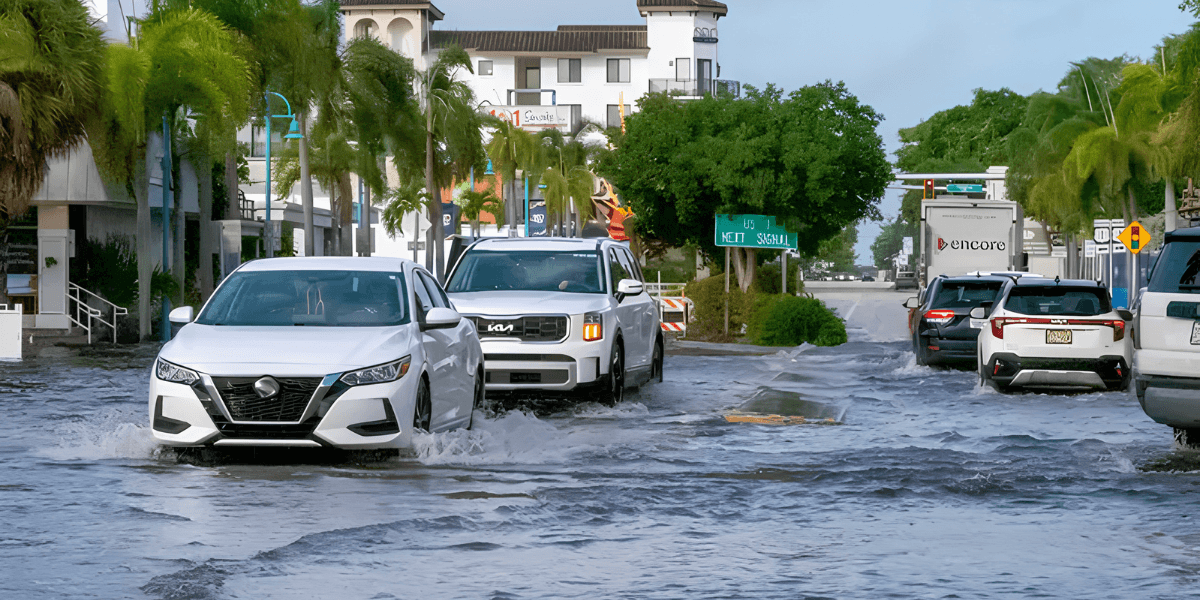
Unusually high tides brought seawater onto South Florida streets, while officials warned that additional flooding could affect vulnerable coastal neighborhoods.
South Florida communities faced renewed coastal flooding on October 25 as king tides pushed seawater onto streets and into low-lying areas, prompting concerns about transportation, property access and the region’s ability to manage overlapping flood risks. The flooding came as forecasters warned that elevated tides and a wet weather pattern could continue affecting parts of Miami-Dade and Broward counties.
Images from Miami showed water covering sections of Northeast 79th Street, illustrating how high tides can disrupt daily life even without a hurricane or major coastal storm. The flooding also highlighted a persistent challenge for South Florida, where low elevations, extensive development and drainage systems connected to coastal waterways can make neighborhoods vulnerable when water levels rise.
King tides are unusually high astronomical tides associated with the positions of the moon and sun. They occur naturally, but their effects can become more disruptive when elevated coastal water levels coincide with heavy rainfall, strong winds or limited drainage capacity.
High Water Reaches Urban Streets
The flooding reported across South Florida affected areas where seawater can move into streets and other low-lying locations during peak tides. Even relatively shallow water can slow traffic, limit access to businesses and homes, and create hazards for drivers who cannot easily judge the depth of water on a roadway.
Coastal flooding does not always develop in the same way as flooding caused by heavy rain. When tides are high, seawater can enter through vulnerable shoreline areas or interfere with drainage outlets, making it harder for rainwater to flow away from streets. In some locations, both processes can occur at the same time.
That combination is particularly important in South Florida, where neighborhoods are connected by canals, waterways and drainage infrastructure. A street that remains passable during an ordinary high tide may experience more significant water accumulation when tides coincide with rainfall or strong onshore winds.
The extent of flooding can vary considerably between nearby neighborhoods. Elevation, road design, drainage equipment and proximity to the shoreline all influence how water moves through a community. As a result, a regional flood advisory does not mean that every street will experience the same conditions.
More Flooding Possible Through Monday
Forecasters warned that the risk would continue beyond Sunday as king tides remained elevated and additional unsettled weather affected the region. The combination created concern for low-lying coastal communities and roadways already known to experience recurring flooding.
Residents were urged to follow local weather updates and pay attention to tide timing when planning travel through vulnerable areas. Drivers should avoid roads covered by water when the depth or condition of the roadway is uncertain, since floodwater can hide potholes, debris and damaged pavement.
Flooding can also affect businesses and property owners. Shops may face reduced access when nearby streets become impassable, while residents may need to move vehicles away from locations where water regularly accumulates. Repeated flooding can add maintenance expenses and complicate property management, even when individual events do not cause extensive structural damage.
The immediate risks depend on local conditions and the timing of high tide. Forecasts help identify periods of elevated concern, but they cannot determine precisely which streets will flood or how quickly water will recede.
Why South Florida Is Vulnerable
South Florida’s geography creates a distinctive flood-management challenge. Much of the region is relatively flat, and many developed areas sit close to sea level. Water may drain slowly in some locations, especially when coastal water levels limit the ability of drainage systems to discharge runoff.
Urban development also changes how rainwater moves. Roads, parking areas and buildings reduce the amount of ground available to absorb rainfall, increasing the volume of water that must be carried by drainage systems. During intense rain or unusually high tides, those systems can face additional pressure.
Local governments have invested in pumps, drainage improvements and other resilience measures, but infrastructure projects take time and cannot eliminate every flood risk. Maintenance, rising water levels and changing rainfall patterns all affect how well systems perform.
For residents, the repeated appearance of tidal flooding has made the timing of high water an increasingly practical concern. Some roadways may become difficult to navigate during particular tide cycles, requiring drivers to adjust routes or allow more time for travel.
Implications for Homes and Businesses
Flooding can affect properties in ways that extend beyond visible water on a street. Repeated exposure can damage road surfaces, landscaping and building materials, while water entering garages or ground-level structures may create costly repair work.
Businesses may experience interruptions when employees, suppliers or customers cannot easily reach their premises. Restaurants and shops near affected streets can lose foot traffic, and delivery operations may need to use alternate routes.
Property owners and renters should also understand that standard insurance policies do not necessarily cover flood damage. Coverage depends on the policy and the type of loss, so residents should review their arrangements rather than assume that all water-related damage is insured.
The risks are not confined to buildings directly beside the ocean. High tides can influence drainage in areas connected to coastal waterways, while rainfall can create flooding farther inland. The relationship between coastal and rainfall flooding makes local conditions especially important.
A Continuing Resilience Challenge
The flooding on October 25 illustrates how king tides can affect everyday life across South Florida. While the event was not a hurricane, water covering urban streets can still create hazards for drivers, disrupt business activity and test local drainage systems.
The immediate priority remains monitoring forecasts and avoiding flooded roads. Over the longer term, repeated tidal flooding underscores the importance of infrastructure maintenance, neighborhood-level planning and public awareness of local flood exposure.
South Florida’s communities will continue to face periods when high tides coincide with rain or other weather conditions. The severity of each event will vary, but the latest flooding reinforces the need for residents, businesses and local officials to plan around a recurring feature of life in a low-lying coastal region.

Miami Highlight Contributor
Covers politics, statewide affairs, and long-form investigations across Florida.
This article features partner, contributor, or branded content from a third party. Members of the Miami Highlight editorial staff were not involved in the creation of this content. All views and opinions are those of the contributor alone.
You May Also Like

South Dade Families Gather for Spook & Slam...
South Florida Prepares for King Tides and Heavy...

South Florida Commercial Real Estate Sales Slow as...

Miami Hurricanes Defeat Florida State 43–35 in Double-Overtime...
Fort Lauderdale Opens New Water Treatment Plant as...