
Major Miami Worldcenter Financing Signals Continued Confidence in Downtown Development
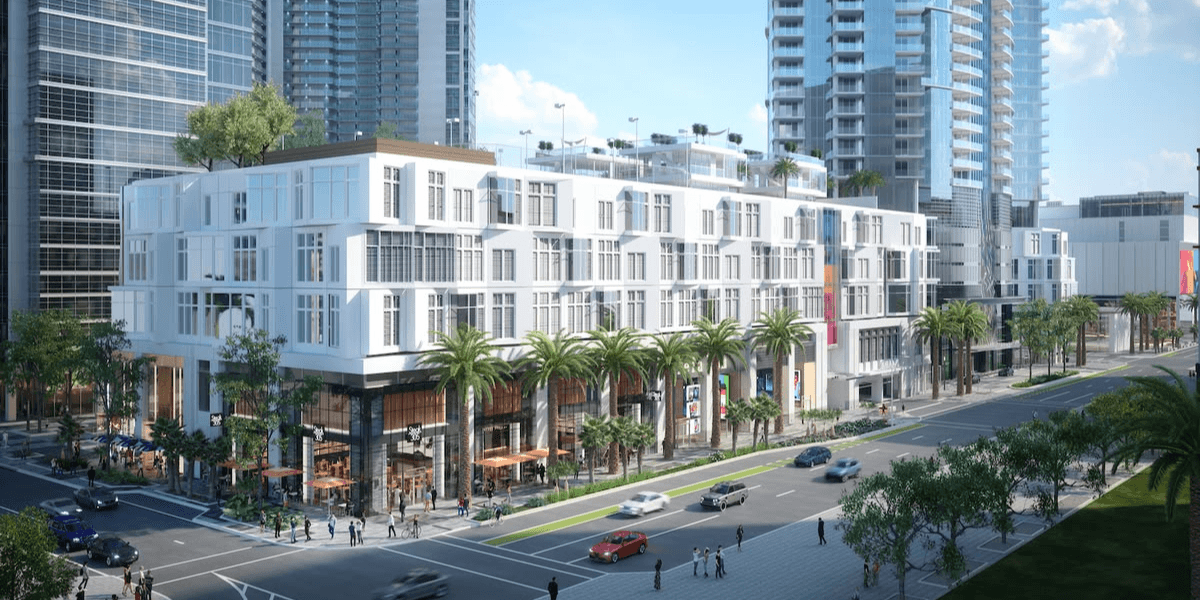
Downtown Miami’s transformation continues to gain momentum as one of the city’s largest mixed-use developments secured a major financing milestone, underscoring continued investor confidence in South Florida’s real estate market despite higher interest rates and evolving economic conditions.
On July 27, developer Witkoff, in partnership with Monroe Capital, announced it had secured a $302.6 million construction loan for the first phase of a three-tower residential development at 700 North Miami Avenue within Miami Worldcenter. The financing marks another significant step forward for one of the largest urban redevelopment projects in the United States and highlights ongoing investment in Miami’s urban core.
The first phase of the project will add new residential units to Downtown Miami, an area that has experienced sustained population growth, increased business investment, and expanding demand for housing over the past several years. Miami Worldcenter, spanning multiple city blocks, has steadily evolved into a mixed-use district featuring residential towers, retail space, hospitality, entertainment venues, and public gathering areas.
Industry analysts note that obtaining large construction loans has become more challenging since interest rates began rising. Against that backdrop, the latest financing demonstrates that lenders remain willing to back projects in markets where long-term fundamentals remain strong. Miami continues to attract domestic migration, international investment, and corporate relocations, factors that have helped support demand for both residential and commercial real estate.
The project is expected to generate economic activity extending beyond construction itself. Large-scale developments typically create jobs across engineering, architecture, construction, property management, and professional services while supporting nearby restaurants, retailers, and small businesses that benefit from increased residential density.
Downtown Miami has experienced significant changes over the past decade, evolving from a primarily business-oriented district into a neighborhood where people increasingly choose to live, work, and socialize. Mixed-use developments have played a central role in that transformation by combining housing with retail, dining, office space, and entertainment within walkable environments.
Urban planners increasingly point to projects such as Miami Worldcenter as examples of modern city development that emphasize accessibility and mixed land use. Integrating residential communities with commercial amenities and public spaces can reduce commuting distances while encouraging pedestrian activity and supporting local businesses.
The financing announcement also reflects broader confidence in South Florida’s long-term economic outlook. Despite ongoing concerns surrounding affordability, insurance costs, and elevated borrowing expenses, institutional investors continue identifying Miami as one of the country’s most attractive markets for large-scale development due to its population growth, international connectivity, and diversified economy.
Local business organizations have likewise emphasized the importance of continued investment in Downtown Miami. New residential developments increase demand for neighborhood services, expand the customer base for existing businesses, and contribute to the area’s broader economic vitality. Nearby districts, including Brickell, Edgewater, and Wynwood, have experienced similar growth as new housing and commercial investment reshape the urban landscape.
At the same time, city leaders continue balancing growth with infrastructure needs. Transportation improvements, utility capacity, public safety, and community services remain important considerations as Miami accommodates additional residents and businesses. Long-term planning will play a critical role in ensuring that development keeps pace with the city’s expanding population.
For prospective residents, the continued delivery of new housing may gradually expand available inventory, although affordability remains an important challenge across much of South Florida. Developers continue introducing projects aimed at a variety of market segments while responding to evolving buyer preferences for walkable neighborhoods and mixed-use communities.
The financing secured on July 27 represents another milestone in Miami’s ongoing urban transformation. As construction progresses at Miami Worldcenter, the project illustrates how sustained private investment continues to shape Downtown Miami’s future while reinforcing the city’s position as one of the nation’s most active real estate and business markets.

Miami Highlight Contributor
Covers politics, statewide affairs, and long-form investigations across Florida.
This article features partner, contributor, or branded content from a third party. Members of the Miami Highlight editorial staff were not involved in the creation of this content. All views and opinions are those of the contributor alone.
You May Also Like

Inter Miami Draws Record Crowd in 1-1 Match...

Amazon and Qualcomm Establish Multigenerational Partnership for AI...

Five People Killed After Amazon Cargo Plane Crashes...
Amazon Cargo Plane Crashes at Miami International Airport,...

No. 7 Miami Hurricanes Open Season With Stanford...